

How to Verify Handmade Artisan Quality Before You Buy
Last Updated: November 7, 2026
Quick Summary
To verify artisan quality, check the product photos for several angles and close-ups, confirm the listing names materials, size, and process, and find a maker profile that names the person and workshop. Ask the seller for a photo of the item in progress or a detail shot, and compare listings, since identical photos across many shops signal dropshipping.
- Handmade pieces show slight texture shifts and varying edges, while factory pieces look uniform and match exactly.
- Ask the seller how the item was made and what materials were used before you pay.
- A listing with no material details and no care instructions often means the seller never made the item.
- Small batch size and transparency about method are fair signals for slip-casted pieces.
- Red flags include stock photos and vague material claims.
Table of Contents
- Handmade vs. Mass-Produced Products: What the Difference Looks Like
- Your Handmade Product Quality Checklist for Materials and Construction
- How to Find Genuine Handmade Items Online
- Frequently Asked Questions
Handmade vs. Mass-Produced Products: What the Difference Looks Like
Learning how to verify handmade artisan quality starts with knowing what separates a real handmade piece from a factory copy. Handmade items often carry small irregularities and tool marks that mass-produced goods lack.
Handmade means a person shaped, cut, glazed, or finished the item by hand. Mass-produced means a machine or assembly line copied one master design many times.
Here is what the difference looks like in person:
- Surface: handmade pieces show slight texture shifts; factory pieces look uniform
- Edges: hand-finished edges vary a little; molded edges match exactly
- Pattern: one-of-a-kind designs shift from piece to piece; printed patterns repeat
- Weight: handmade work feels uneven in a good way; factory work feels identical every time
Our handbuilt nerikomi tea bowls show this clearly. Colored clay layers form the pattern, and the listing for Nerikomi Chawan Tea Bowl #1 in Sunset and Speckle describes its handbuilt chawan form and layered colored clay.

That variation is not a flaw. It is the signature of a real maker.
Your Handmade Product Quality Checklist for Materials and Construction
Run this handmade product quality checklist before you pay. Good materials and clean construction are the two strongest signs of artisan quality.
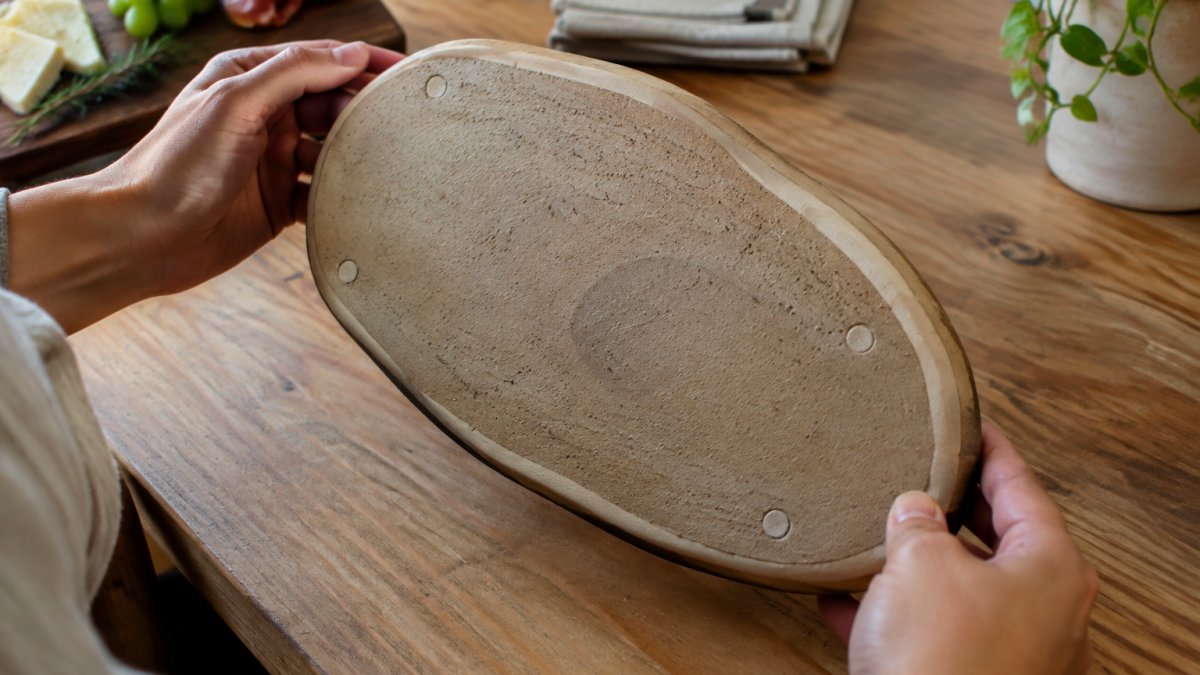
Materials to check:
- Clay, glass, wood, or fiber named in the listing
- Food-safe glaze stated for anything used with food
- Dishwasher and microwave guidance included
- Color described as part of the material, not painted on top
Construction to check:
- Joins are smooth, with no cracks or gaps
- Edges are sanded or smoothed, not sharp
- Glaze covers evenly, with no bare patches
- The piece sits flat and does not rock
Ask the seller how the item was made and what materials were used.
Our Medium Handbuilt Round Nerikomi Cheeseboard/Charcuterie Board in Magma lists its clay body, food-safe finish, and exact size. That level of detail is what a careful maker provides. A Wheel Thrown Mug 65 On Speckled Stoneware In Transparent Spring Colors shows throwing marks and glaze pooling you can inspect in the photos.


Watch out: a listing with no material details and no care instructions often means the seller never made the item.
How to Find Genuine Handmade Items Online
Finding genuine handmade items online comes down to proof. Photos, descriptions, and a traceable maker separate real artisans from resellers.
Use these steps:
- Read the product photos. Look for several angles, close-ups, and natural light.
- Check the description. Materials, size, and process should all be listed.
- Find the maker. A real artisan profile names the person and the workshop.
- Ask questions. Request a photo of the item in progress or a detail shot.
- Compare listings. Identical photos across many shops signal dropshipping.
- Look for documentation. Certifications, batch size, and provenance build trust.
Red flags include stock photos and vague material claims.
A slip-casted sculpted vase, like the Calla Lily Slip Casted Sculpture Vase 7, can still be a small-batch piece. Ask how many were made. Small batch size and transparency about method are fair signals.
If you want to browse real handmade work for small spaces, these handmade art ideas for small apartments show how one-of-a-kind pieces fit rental living.
Here are the steps the article recommends for confirming a piece is genuinely handmade before you buy.
| Step | What to do |
|---|---|
| Read the product photos | Look for several angles, close-ups, and natural light |
| Check the description | Materials, size, and process should all be listed |
| Find the maker | A real artisan profile names the person and the workshop |
| Ask questions | Request a photo of the item in progress or a detail shot |
| Compare listings | Identical photos across many shops signal dropshipping |
| Look for documentation | Certifications, batch size, and provenance build trust |
The hardest part of buying handmade is trusting the seller. Studio at 432 is a small, home-based business, and every piece we sell is handcrafted with beauty, function, and affordability in mind. Our listings show materials, exact dimensions, and care details so you can check the work before you buy. Browse our handcrafted home decor and find a piece with a story behind it.
Frequently Asked Questions
Are artisan and handmade the same thing?
Not exactly. Handmade means a person made the item rather than a machine line. Artisan describes the maker's skill and approach: an artisan works with materials by hand, often in small batches, and controls the production process from start to finish. A handmade item can be simple and still be artisan-made. What matters when you verify artisan quality is whether the seller can describe the process, the materials, and the person behind the work. Ask for that story before you buy.
How can you tell if a product is genuinely handmade?
Look for small inconsistencies that come from human hands: slight differences in glaze pooling, hand-cut edges, or a pattern that shifts from one piece to the next. Read the product listing for named materials and a described process. Check the product photos for real workshop settings. Then ask the maker how the piece was built. A seller who answers with specifics is usually the real thing.
What signs indicate that a handmade item is well made?
Smooth, evenly finished surfaces are a good sign. On ceramics, check that the rim is smooth and the glaze covers evenly. A well-made piece feels balanced and shows no sloppy seams or drips. Compare the maker's photos against the description, and ask whether the item is food, dishwasher, or microwave safe if that matters to you.
